Live the mission before it flies.
Analog missions simulate life and research on another world, with isolation, procedures, EVAs and real science, right here on Earth. At LUMO the habitat itself is the experiment. A HEX container, the same standard that flies to the Moon.
Every European analog mission. One calendar.
Dates, open seats, research slots and application links for the analog stations across Europe, aggregated from the operators and verified by hand. If you want to fly this year, start here.
Crew. Research. Thesis.
Whether you want to be inside the habitat, put an experiment into it, or build your degree around it, there is a track for you. We develop every campaign together with our participants.
Analog Astronaut
- Live and operate in a HEX container habitat
- Run experiments, maintenance and simulated EVAs
- Structured protocols, roles and mission debriefs
- A first real step toward the astronaut path
No prior spaceflight experience needed. Motivation, fitness and English are what count.
Express interest →Research Payload
- Your experiment in a standardised HEX payload bay
- Research with the analog crew in the loop
- Materials, sensors, ECLSS, telerobotics, psychology
- Data support and joint publication after the campaign
Principal Investigators define the science. We provide the habitat, the crew and the operations around it.
Propose an experiment →Thesis and Student Projects
- Build your thesis around a real campaign
- Structures, interfaces, ops, life support, human factors
- Supervised together with your university
- Hardware you can point at, not just a PDF
Many analog astronauts end up in the space sector. Start where the hardware is.
Propose a project →Research areas we host.
Analog campaigns are incubators. They raise technology readiness, generate publishable data and stress test procedures. These are the fields our HEX bays are built to host.
Your field missing? That is usually a good sign. Tell us about it.
The habitat is the experiment.
Most analog stations simulate a habitat. Ours is the flight hardware lineage. Every campaign runs inside HEX containers built to the same open standard that is headed for the lunar surface. When you test in our bay you are not testing in a stand in. You are building heritage on the actual interface your payload would fly with.
And because HEX is a standard, your integration does not die with the campaign. The same mounting grid, the same power and data coupling, the same procedures, from Earth analog all the way to a lunar manifest.
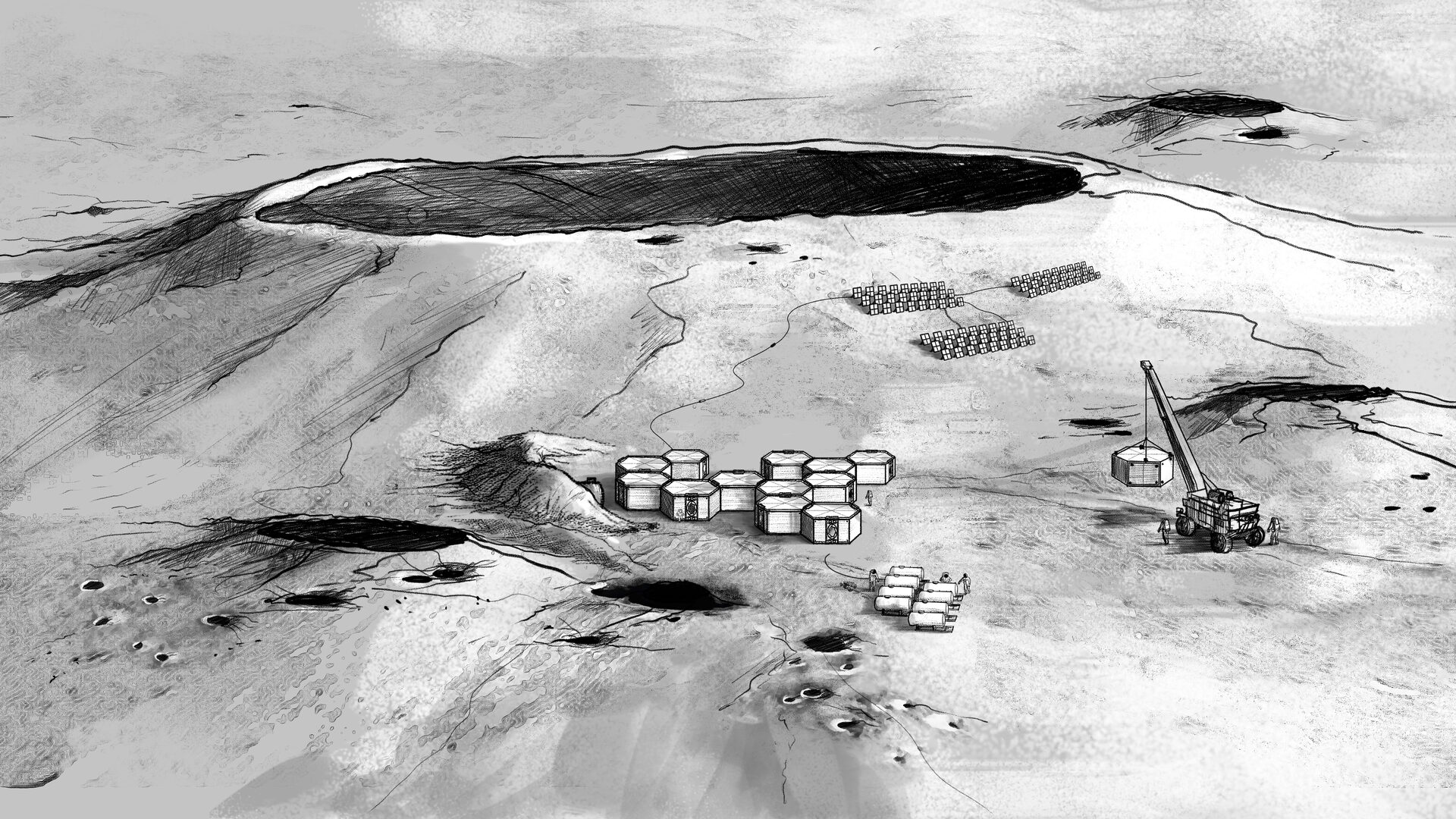
Test stand
Your payload integrated and qualified in a HEX bay on the ground.Analog campaign
Field operation with crew, protocols and mission control.Flight qualification
From steel ground units to flight grade aluminium hardware.Lunar surface
Manifested on a candidate lander. Same bay, same interface.We are honest about where we are. The first LUMO analog campaign is being designed now, together with early partners. Joining at this stage means shaping the program, from crew protocols and payload bays to science goals, not just booking a seat.
All European missions →
Do I need prior experience to join as crew?
No. Motivation, basic fitness and working English matter more than a space CV. Crews are intentionally mixed, with students, engineers, scientists and professionals from outside aerospace.
Can I bring my own experiment?
Yes, that is the point. Research payloads get a standardised HEX bay with defined power, data and mounting interfaces. If you do not have your own experiment, you can join a campaign and support the hosted research.
Can I build my thesis around this?
Absolutely. We supervise Bachelor and Master projects together with your university, from habitat structures and interfaces to human factors and operations research. Early contact helps us align the campaign timeline with your semester.
What does participation cost?
Campaign 01 conditions are defined together with the first partners and depend on track and scope. Register your interest and we talk specifics, with no commitment attached.
Where do campaigns take place?
First ground campaigns run in southern Germany, with partner analog stations and extreme environments on the roadmap as the program grows, up to Antarctica class deployments.
Get on the crew list.
Tell us who you are and which track fits. We reply personally to every message, and early voices get to shape Campaign 01.
Registering interest is not a booking and costs nothing. We keep you posted as the campaign takes shape.